SCOTT TROXEL
ARTIST BIO:
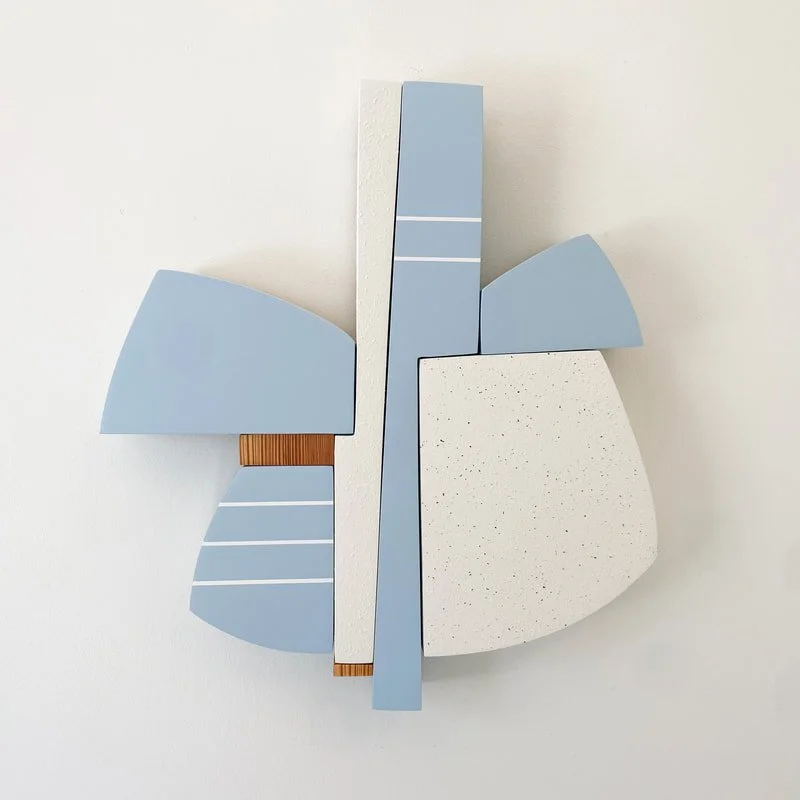
Scott Troxel creates dynamic, retro-futurist wooden sculptures inspired by the aesthetics of bygone technology and the forward-looking optimism of the Atomic Age and mid-century modernism. His work blends nostalgic visual language with contemporary craftsmanship, resulting in pieces that feel both familiar and futuristic. Through bold forms, intricate detailing, and a deep appreciation for design history, his sculptures evoke a sense of wonder rooted in the past while imagining new possibilities ahead. Troxel has exhibited widely at major art fairs and exhibitions across the United States, including The Other Art Fair New York, Texas Contemporary, SCOPE Miami, SOFA Chicago, LA Art Fair, and Art Wynwood. His work is held in corporate, hotel, and private collections throughout the United States, Canada, Europe, Asia, and South America. Notable installations can be found in iconic locations such as The Hotel del Coronado and The Shard in London. Troxel’s background in commercial product design, graphics, and visual aesthetics parallels artists like Andy Warhol, who developed their artistic voice through real-world applications before transitioning into fine art. He currently works from his studio and woodshop by the ocean in southern coastal New Jersey, where environment and craftsmanship continue to shape his evolving practice.
ARTIST STATEMENT FOR SOLO EXHIBITION: ALMOST FAMILIAR
Almost Familiar, a solo exhibition of new work by New Jersey artist Scott Troxel, opens at Houska Gallery on October 23, 2026. Drawing from the visual language of mid-century modernism, Troxel’s work brings together bold geometric structures, biomorphic forms, and carefully balanced fields of color to create objects that feel both nostalgic and unexpected. His compositions evoke the optimism of postwar design, the rhythms of brutalist architecture, and the playful logic of abstract sculpture, while resisting any single point of recognition. Familiar shapes seem to emerge— a flower, a figure, a machine, a symbol—only to shift into something more ambiguous within the viewer’s subconscious. Almost Familiar invites viewers into that space between recognition and discovery, where the known becomes strange and the ordinary takes on a new form.